おすすめの Google 拡張機能です!新しい言葉を勉強しましょう!
Here are the recommended Chrome extensions! Let’s learn new words here!
 えみ先生
Today, I’m going to talk about “resumes,” which you’ll need if you want to work in Japan.
However, in Japan, we don’t usually call them “レジュメ”!
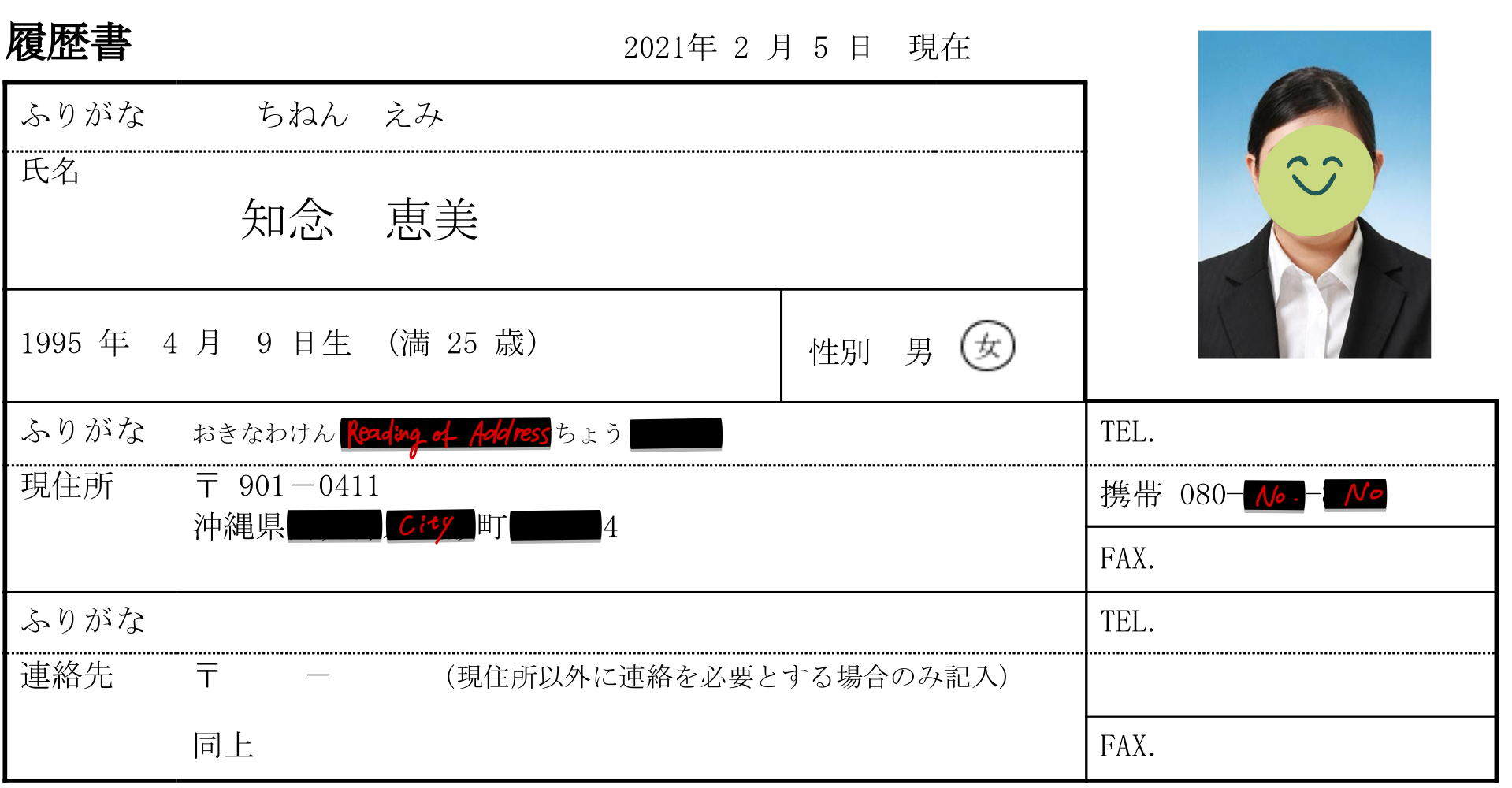
In this post, let’s learn how to write one by looking at the actual documents that I, Emi-sensei, submitted when I was job hunting.
Just a heads-up: copying me doesn’t guarantee you’ll get a job!
Do your best to write your own unique motivation for applying and self-promotion!
Fiding a Job in Japan
When you start job hunting (就活 / 転職) in Japan, one of the first things you will notice is that the application process is quite specific. Unlike in some Western countries, Japanese companies rely heavily on standardized paper documents.
To work in Japan, you generally need to prepare two main documents:
a Rirekisho (resume)
and
a Shokumu Keirekisho (work history sheet).
Let’s take a closer look at each one!
Wait, is a resume not enough?
In many Western countries, you only need one document (a Resume or CV).
However, in Japan, you generally need two different documents when applying for a full-time job:
- Rirekisho (履歴書): A standard, personal profile form.
- Shokumu Keirekisho (職務経歴書): A detailed work history sheet.
Note: If you are applying for a part-time job as a student, you usually only need the “Rirekisho“.)
履歴書 (Rirekisho) vs. 職務経歴書 (Shokumu Keirekisho)
Here’s a brief explanation of these 2 job documents.
| Document | Purpose | Format | Who needs it? |
| 履歴書 Rirekisho | To show your basic info, education, and license/certifications. | Standardized format | Everyone (Full-time & Part-time) |
| 職務経歴書 Shokumu Keirekisho | To show your detailed work experience, skills, and achievements. | Free format (usually A4, 1–2 pages) | Job seekers looking for full-time/career positions |
How to Write a 履歴書 (Rirekisho)
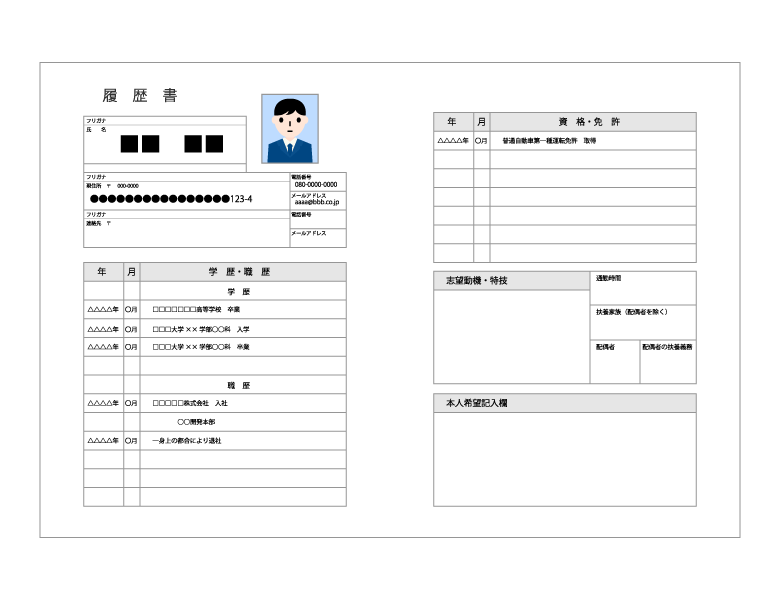
A Rirekisho follows a standard template: your education and career background go on the left page, while your certifications, skills, reason for applying, and other details go on the right page.
Basic Rules
- Use a template:
There is a standard format in Japan. Try searching for 「履歴書 テンプレート」 to download one.- Recommended sites:
- Mynavi Tenshoku Templates (Offers various patterns)
- App version (Great for part-time jobs): Indeed Resume App (iOS) / Indeed Resume App (Android)
- Recommended sites:
- A facial photo is a MUST:
Unlike some Western countries where photos are omitted for privacy, Japanese resumes almost always require a photo.- Size: Height 40mm × Width 30mm
- Background: Blue, white, or gray
- Attire: Suit or formal business style
- Expression: Neutral (do not show your teeth)
- Hair: Tie up long hair; use hairpins if your bangs cover your eyes.
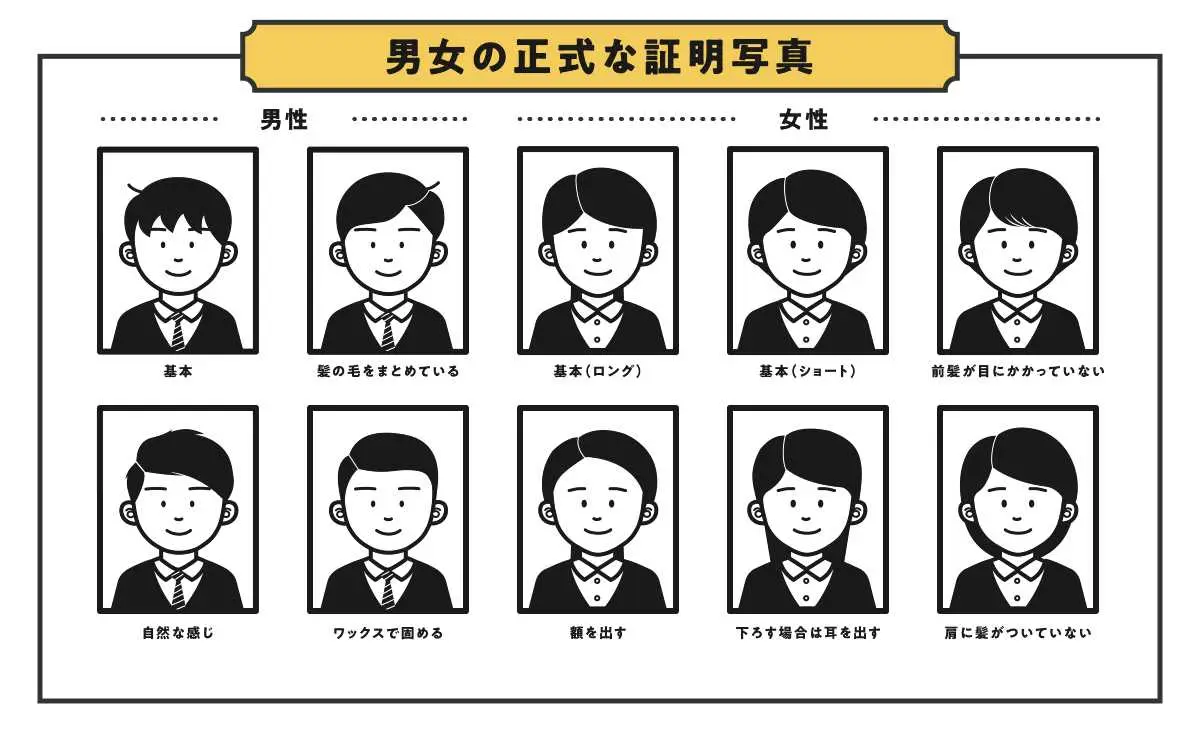
| Male | Female | |||
|---|---|---|---|---|
| Basic | Neatly styled hair | Basic (Long-haired) | Basic (Short-haired) | Bangs not covering eyes |
| Natural look | Fixed with hair wax | Forehead visible | Ears visible if not tied | Hair off shoulders |
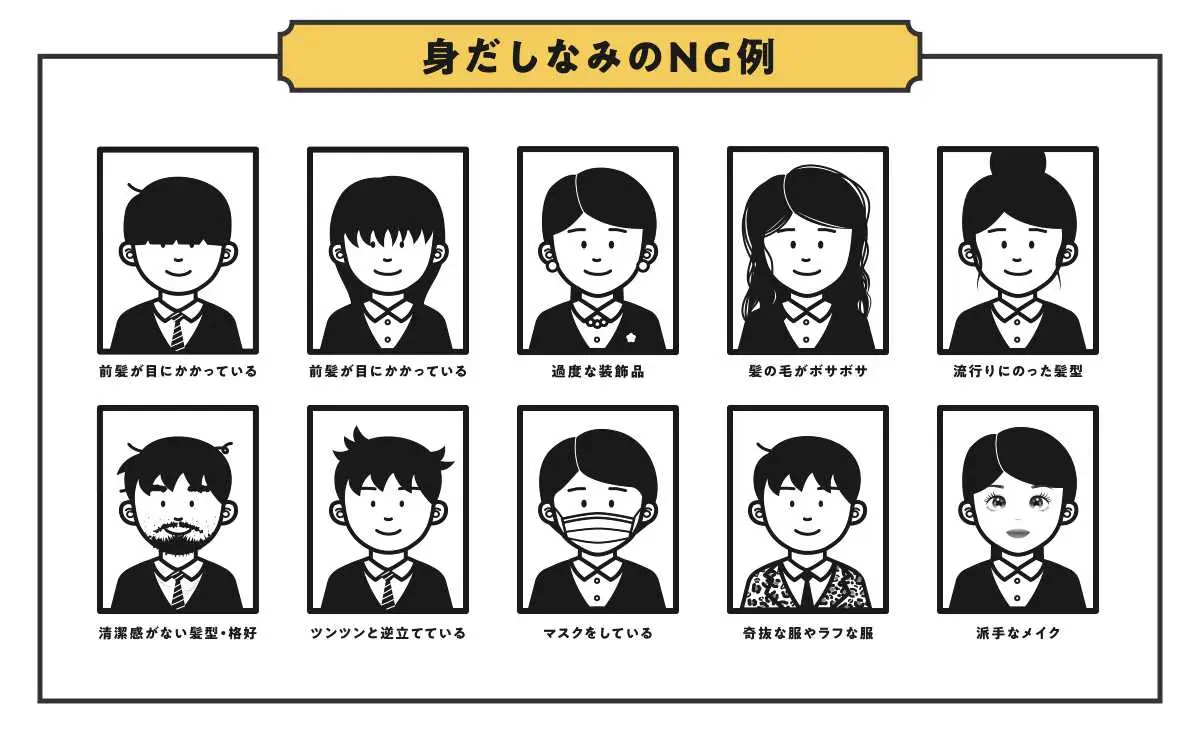
| Bangs covering eyes | Bangs covering eyes | Excessive accessories | Messy / unkempt hair | Trendy/overly styled hair |
| Unclean hair/outfit | Spiky hair | Wearing a mask | Unusual or casual clothes | Heavy / flashy makeup |
- Date format (Japanese Era vs. Western):
Japanese people often use the Japanese imperial era (e.g., Reiwa), but using the Western calendar (e.g., 2026) is completely fine for foreigners.
Just make sure to stick to one format throughout the entire document.
Section-by-Section Guide & Key Vocabulary
① Personal Information (個人情報)
- 氏名 (Shimei): Full name.
- ふりがな / フリガナ (Furigana): Phonetic reading of your name.
Rule: If it says 「ふりがな」 in hiragana, write your reading in hiragana. If it says 「フリガナ」 in katakana, write it in katakana. (However, if your name is written in katakana, you don’t need to rewrite it in katakana).
- 満〜歳 (Man ~ sai): Age (As of the application/interview date).
- 性別 (Seibetsu): Gender.
- 携帯 (Keitai): Mobile phone number. (Usually, only “Keitai” is written; landline/fax is omitted).
- 現住所 (Genjusho): Current address.
- 連絡先 (Renrakusaki): Alternative contact. If it is the exact same as your current address and phone number, just write 「同上」 (Dojo – “Same as above”).
② Educational Background (学歴)
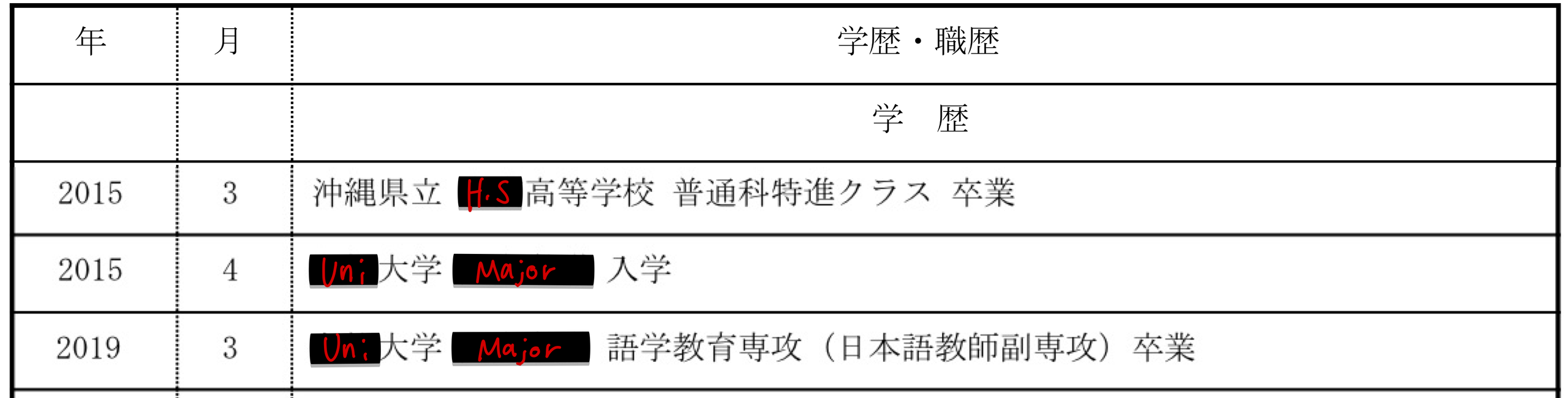
Start listing from high school.
- [High School Name] 卒業 (Sotsugyo): Graduated from [High School Name].
- [University Name] 入学 (Nyugaku): Entered [University Name].
- [University Name] 卒業 (Sotsugyo): Graduated from [University Name].
- Key terms:
| 日本語 | Reading | Meaning |
| 学部 | gakubu | Faculty / Department |
| 専攻 | senko | Major |
| 修了 | shuryo | Completed (a graduate program) |
| 中途退学 | chuto taigaku | Left school before graduation |
③ Work History (職歴)
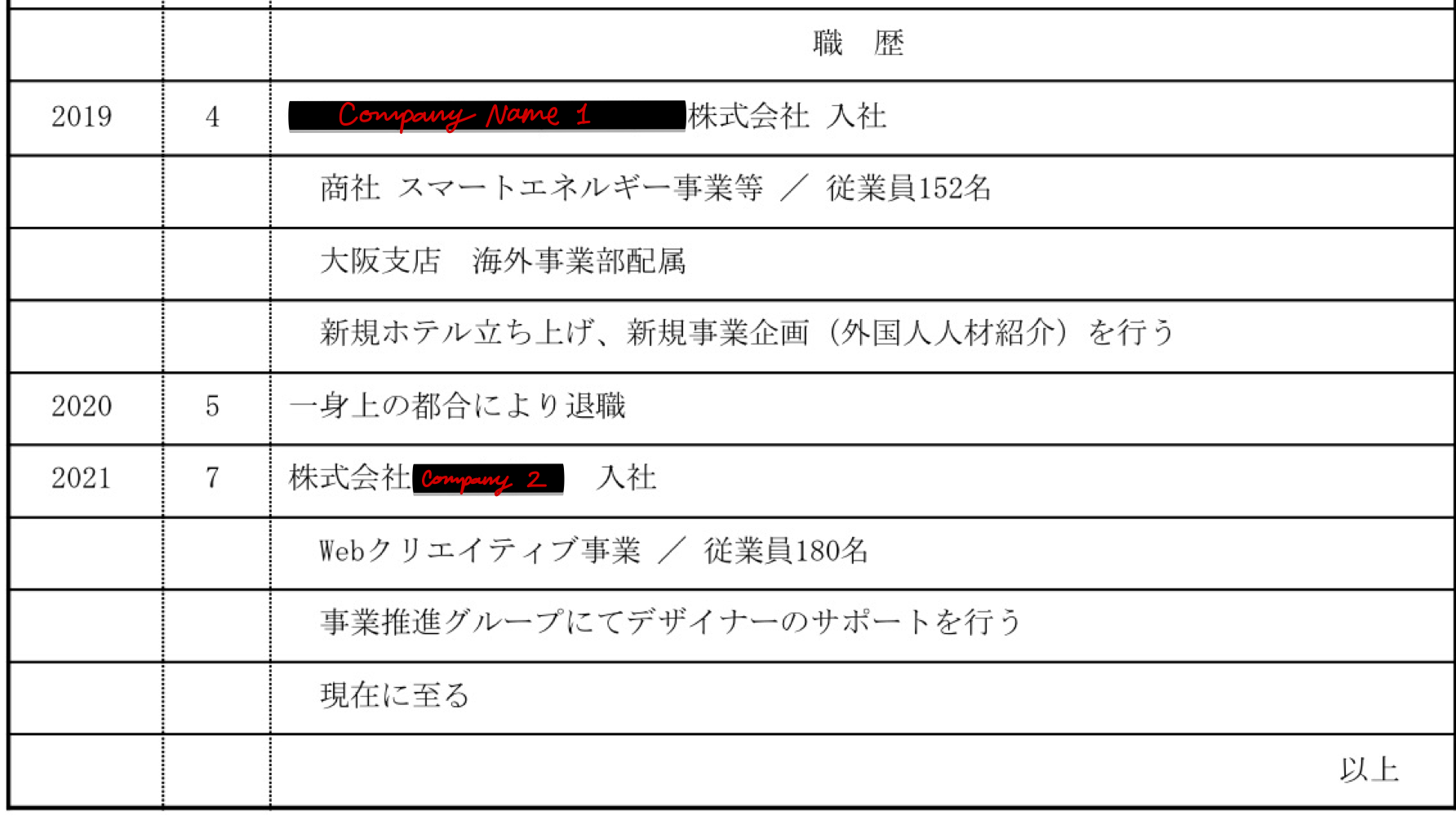
- If you are also submitting a Shokumu Keirekisho:
- [Company Name] 入社 (Nyusha): Joined [Company Name]. (Using katakana is preferred, but English alphabets are fine if katakana is too difficult).
- (If you resigned voluntarily)
一身上の都合により退職 (Isshinjo no tsugou ni yori taishoku): Resigned for personal reasons. - (If laid off / company bankruptcy)
会社都合により退職 (Kaisha tsugou ni yori taishoku): Resigned due to company circumstances. - If currently employed:
Write 「現在に至る」 (Genzai ni itaru) on a new line. (If your leaving date is already decided:現在に至る(〇〇〇〇年○月○日 退職予定)). - Employment type matters: For full-time employees, just write “Nyusha/Taishoku”.
For part-time or contract workers, specify it like 「入社(アルバイト)」. - At the end of the section, write 「以上」 (Ijo – That is all) aligned to the right, and on the next line write:
「詳細な職歴は、添付の職務経歴書をご参照ください。」
(Please refer to the attached work history sheet for details.)
- If you are NOT submitting a Shokumu Keirekisho:
You need to briefly describe the company details under each job:- 事業概要 (Jigyo gaiyo): Overview of the company’s business.
- 従業員数 (Jugyoin-su): Number of employees (to show scale).
- 支店名 / 部署名 (Shiten-mei / Busho-mei): Branch name / Department name.
- 業務内容 (Gyomu naiyo): Your actual duties.
(End with 「以上」 aligned to the right).
- Important: Words change depending on your industry!
- Regular companies: 入社 (Nyusha) / 退社 (Taisha)
- Public organizations (Schools/Hospitals): 入職 (Nyushoku) / 退職 (Taishoku)
- Government offices / Public servants: 入庁 (Nyucho) / 退職 (Taishoku)
- Law / Accounting offices: 入所 (Nyusho) / 退職 (Taishoku)
- Banks: 入行 (Nyuko) / 退職 (Taishoku)
- Freelancers / Sole proprietors: 勤務 (Kinmu) / 退職 (Taishoku)
④ Licenses & Qualifications (免許・資格)
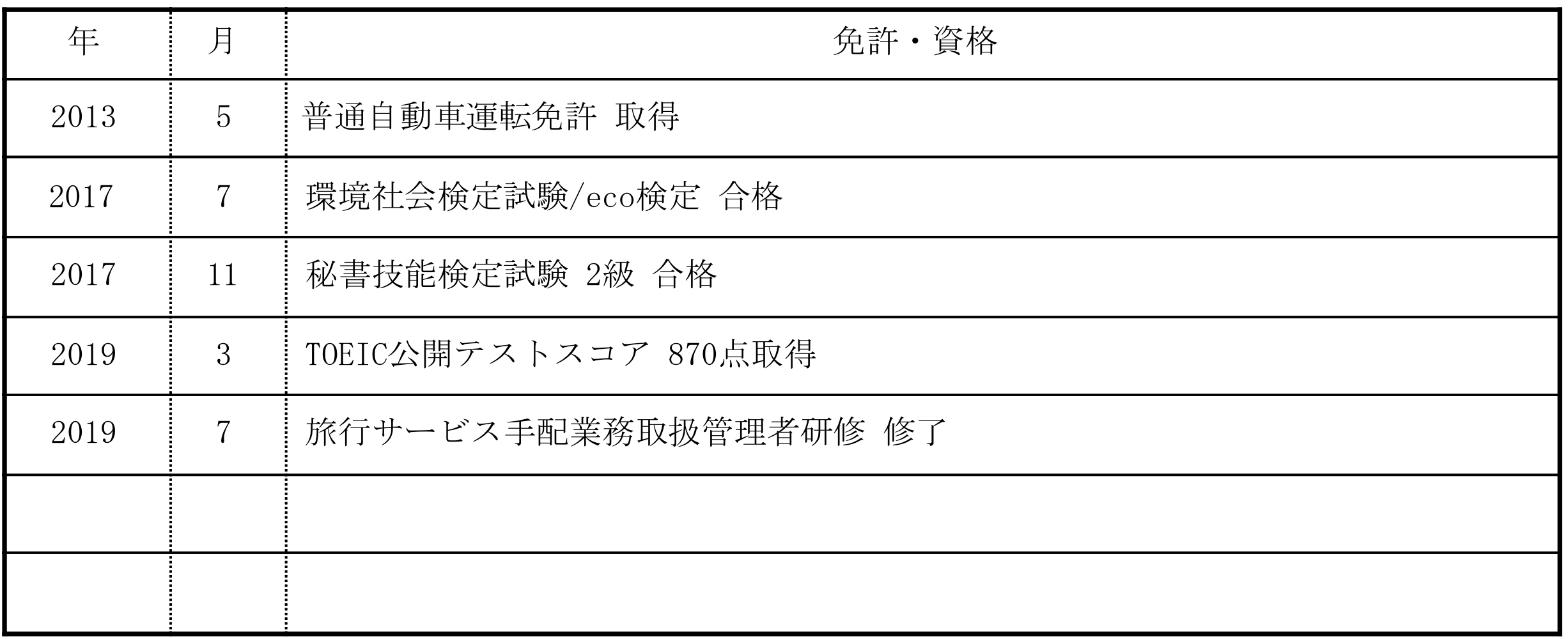
List professional licenses and qualifications relevant to the job, in chronological order.
- Licenses (免許): Legal permits required for certain jobs
(e.g., 運転免許 [Driver’s license], 医師免許 [Medical license], 教員免許 [Teaching license]). - Qualifications (Certifications / 資格): Proof of knowledge/skills
(e.g., 日本語能力試験 [JLPT], 英語検定 [Eiken], 漢字検定 [Kanken], MOS). - Example entry:
〇〇〇〇年 ◯月 普通自動車運転免許 取得 (Obtained regular driver's license)
(Note: Only list driver’s licenses if they are valid for driving within Japan.)
⑤ Motivation / Desired Conditions (志望動機・その他)
- 志望動機 (Shibou douki – Reason for applying):
Explain why you want to work at that company and what you can contribute. Avoid making it too short; aim to fill more than half of the text box concisely.
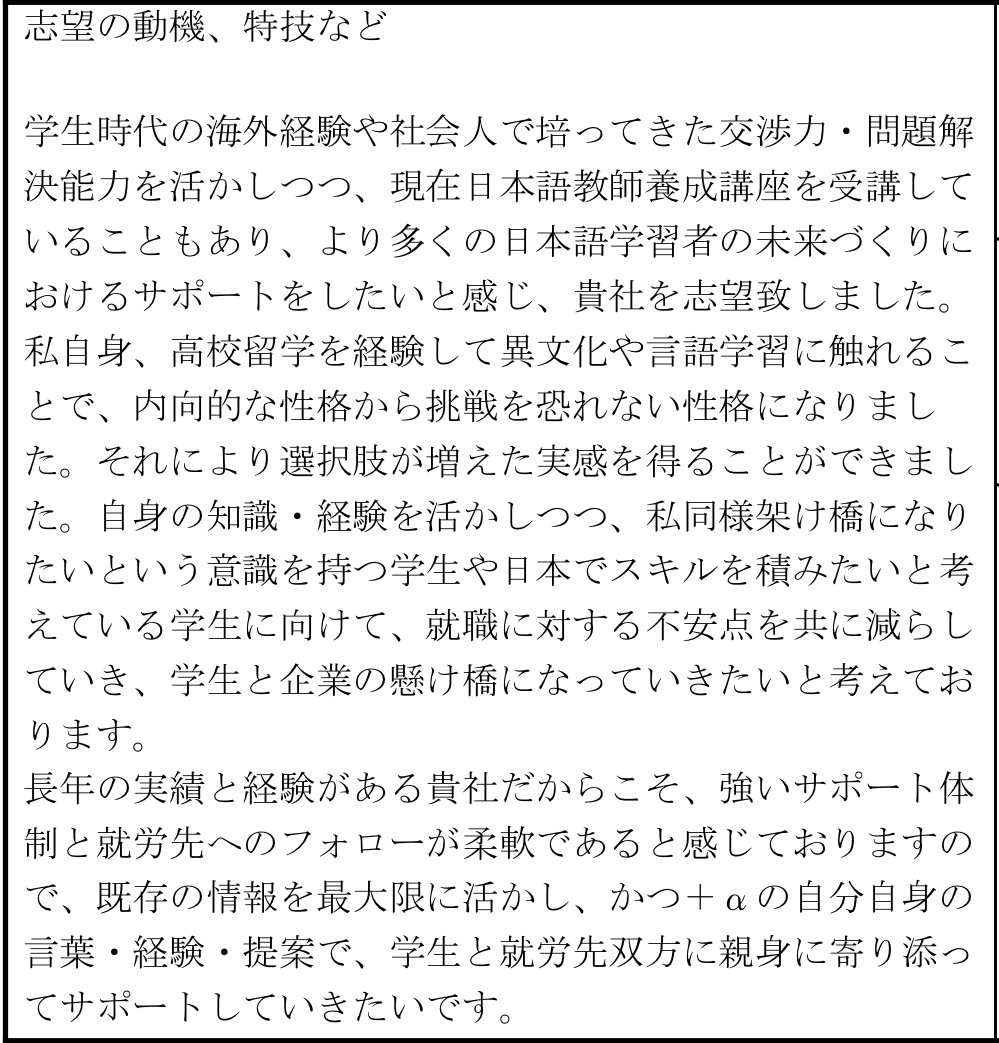
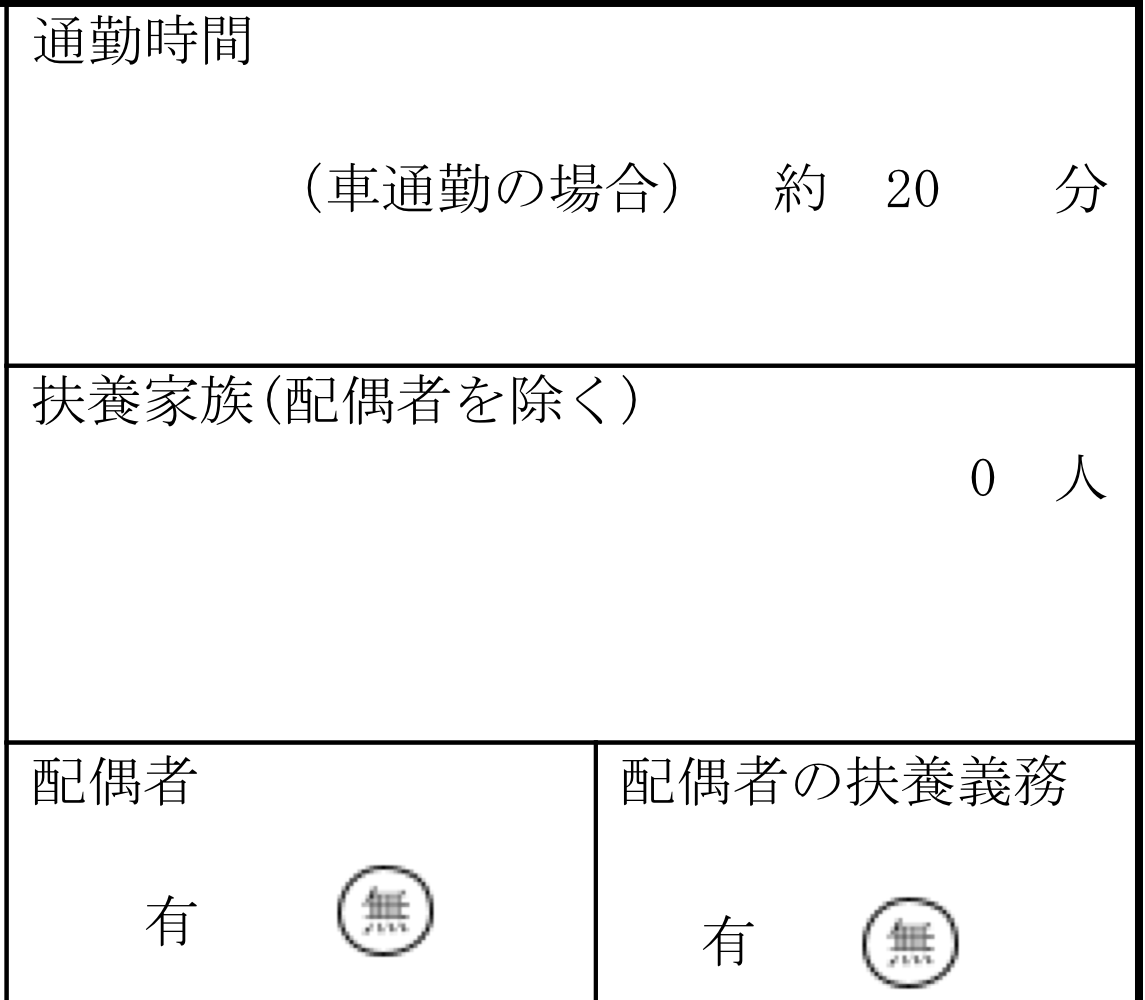
- 通勤時間 (Tsukin jikan – Commuting time):
Specify your mode of transportation (car, train, bus, walking) and approximately how many minutes it takes from your home. (e.g., Car & Train, approx. 45 mins) - 扶養家族 (Fuyo kazoku – Dependents):
Companies need to check this for social insurance and tax purposes.
Write the number of family members you financially support (spouse, children, etc.). - 配偶者 (Haigusha – Spouse):
If you are married, circle “Yes” (有); if single, circle “No” (無). - 配偶者の扶養義務 (Haigusha no fuyo gimu – Obligation to support a spouse):
If you have a legal obligation to support your spouse financially, circle “Yes” (有); if not, circle “No” (無).
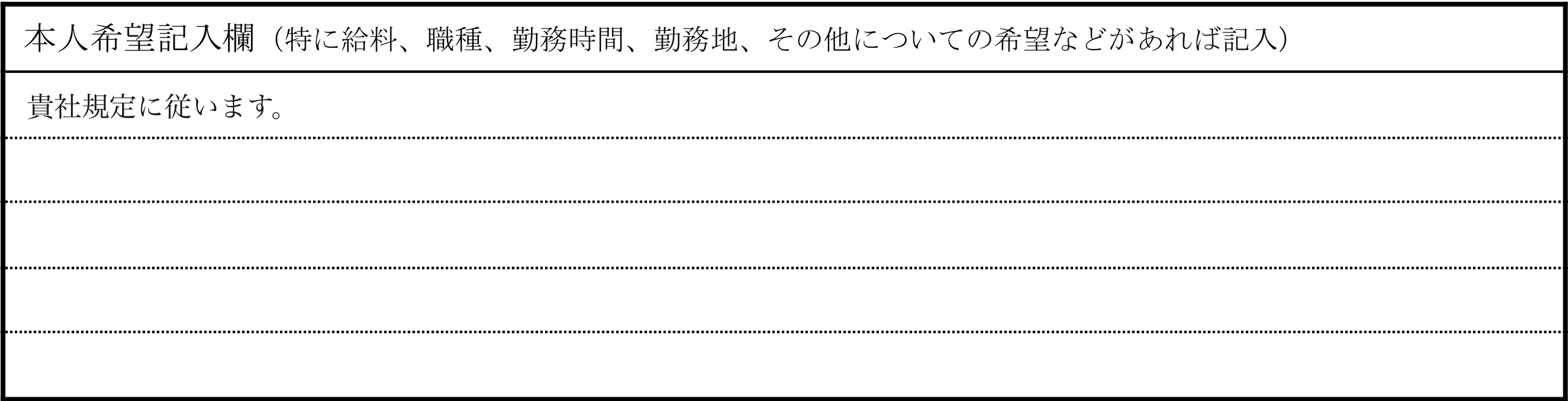
- 本人希望記入欄 (Honnin kibo kinyu-ran – Personal requests):
If working hours or roles vary, you can state your preferences here. However, being too demanding can leave a selfish impression. It is safest to write: 「〜を希望いたしますが、最終的には貴社規定に従います。」 (I would prefer ~, but ultimately I will follow your company regulations.)- If you have no special requests:
「貴社規定に従います。」 - Example for family care:
「同居家族の介護のため、転居を伴う転勤のない職種・地域での勤務を希望いたします。」 - Example for part-time/students:
「学業との両立のため、平日17:00以降、および土日祝日の勤務を希望いたします。」
- If you have no special requests:
Useful Phrases for “Shibou Douki”
| 日本語 | Reading | Meaning & Example |
| 〜と感じ、貴社を志望いたしました。 | ~ to kanji, kisha o shibo shimashita. | I felt ~, and that is why I applied to your company. (e.g., 社会に貢献できる事業に魅力を感じ、貴社を志望いたしました。 ➔ I felt attracted to your business that contributes to society, and that is why I applied to your company.) |
| [Experience]に触れ、[Impression]と感じました。 / [Experience]に触れ、[How you’re influenced]になりました。 | [Experience] ni fure, [Impression] to kanjimashita. / [Experience] ni fure, [How you’re influenced] ni narimashita. | Experiencing [Experience], I felt [Impression]. / Experiencing [Experience], I became [How you’re influenced]. (e.g., 貴社の製品に触れ、人々の生活をより豊かに変える力があると強く感じました。 ➔ Experiencing your products, I strongly felt that they have the power to enrich people’s lives.) |
| 〜と考えております。 | ~ to kangaete orimasu. | I believe that ~ / I am planning to ~ (Polite form of ~ to kangaete iru) (e.g., グローバルな視点を活かしてチームに貢献できると考えております。 ➔ I believe that I can contribute to the team by making use of my global perspective.) |
| 〜と感じております。 | ~ to kanjite orimasu. | I feel that ~ / I am feeling ~ (Polite form of ~ to kanjite iru) (e.g., 貴社の技術力と挑戦し続ける姿勢に深く感銘を受けております。 ➔ I am deeply impressed by your company’s technical strength and attitude of continuous challenge.) |
| 〜に興味があります。 | ~ ni kyomi ga arimasu. | I am interested in ~ (e.g., 持続可能なエネルギー事業に興味があります。 ➔ I am interested in sustainable energy businesses.) |
| [Experience]といった、私の経験を活かしたいです。 | [Experience] to itta, watashi no keiken o ikasitai desu. | I want to make use of my experience, such as [Experience]. (e.g., 接客業で培ったコミュニケーション能力といった、私の経験を活かしたいです。 ➔ I want to make use of my experience, such as communication skills cultivated in customer service.) |
How to Write a 職務経歴書 (Shokumu Keirekisho)
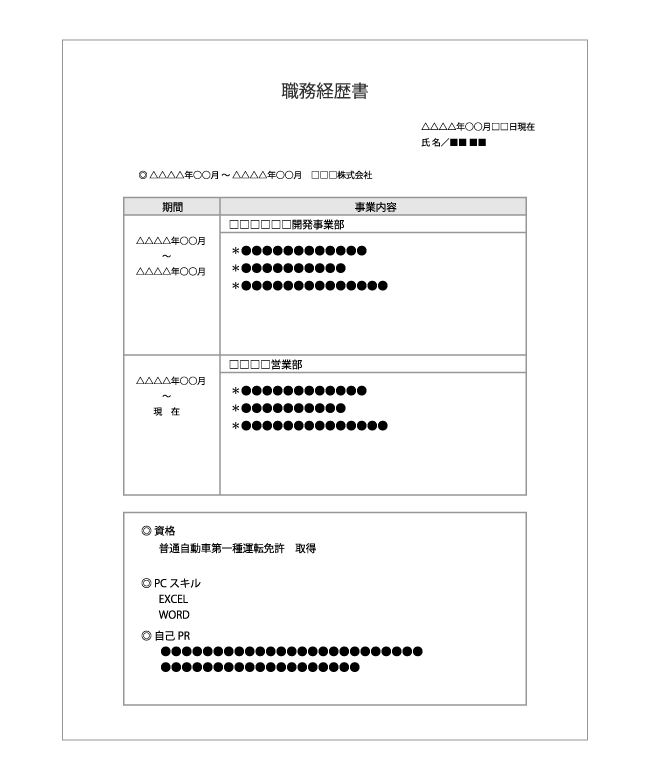
You generally do not need to submit a Shokumu Keirekisho if you are applying for part-time jobs or as a new graduate (right after graduating from university).
However, if you are changing jobs or have past working experience at a company, you will submit it together with your Rirekisho.
Basic Rules
There is no strict template, but it is typically created on 1 to 2 pages of A4-size paper (210mm × 297mm).
- Contents:
- 職務経歴の概要 (Summary of work history):
What industries you’ve worked in, what technologies/skills you’ve gained. - 職歴の詳細 (Detailed work history per company):
Company overview, job description, sales figures, goal achievement rates, etc. - 資格 (Qualifications):
Can be omitted if already written in the Rirekisho. - 語学・実務経験 (Language skills & practical experience).
- 自己PR (Self-promotion).
- 職務経歴の概要 (Summary of work history):
Useful Vocabulary for Shokumu Keirekisho
| 日本語 | Reading | Meaning |
| 職務経歴 | shokumu keireki | Work history |
| 事業内容 | jigyo naiyo | Business activities / Services |
| 資本金 | shihonkin | Capital stock |
| 売上高 | uriage-daka | Sales revenue |
| 従業員数 | jugyoin-su | Number of employees |
| 期間 | kikan | Period / Duration |
| 職務内容 / 業務内容 | gyomu naiyo | Job duties / Responsibilities |
| 主な担当事業 | omona tanto jigyo | Main projects in charge |
| 在職中 | zaisokuchu | Currently employed |
| 実務経験 | jitsumu keiken | Practical experience |
| 能力 | noryoku | Ability / Skill |
| 新規事業 | shinki jigyo | New business / Project |
Useful Phrases
| 日本語 | Reading | Meaning & Example |
| 〜を行う | ~ o okonau / okonau | To carry out ~ (e.g., マーケティング調査を行う ➔ I carried out marketing research.) |
| 〜の作成 | ~ no sakusei | Creation / Preparation of ~ (e.g., 月報の作成 ➔ Preparation of monthly reports) |
| 〜を担当いたしました | ~ o tanto itashi mashita | I was in charge of ~ (e.g., ウェブサイトのリニューアルを担当いたしました ➔ I was in charge of website renewal.) |
| 〜を評価されました | ~ o hyoka saremashita | I was recognized/evaluated for ~ (e.g., チームの売上向上を評価されました ➔ I was evaluated for improving team sales.) |
| 〜よう努めました / 努めております | V-you (Volitional Form) tsutome mashita / tsutomete orimasu | I made efforts / am making efforts to ~ (e.g., スムーズなコミュニケーションが取れるよう努めました ➔ I made efforts to communicate smoothly.) |
| 〜たいと考えております | V-(masu) tai to kangaete orimasu | I am planning / hoping to ~ (e.g., グローバルなプロジェクトに挑戦したいと考えております ➔ I am hoping to take on global projects.) |
Closing
What did you think about Japanese resume rules?
Did it seem a little complicated?
Searching for a new job is already tough enough, and having to prepare official documents in Japanese can feel overwhelming.
えみ先生I know it’s a lot of work, but I’m rooting for you!
If you’d like help checking your resume or practicing for your interviews, please book a lesson with “J-CAREER”!
Let’s practice together one-on-one!
 Google
コメント|Comment